
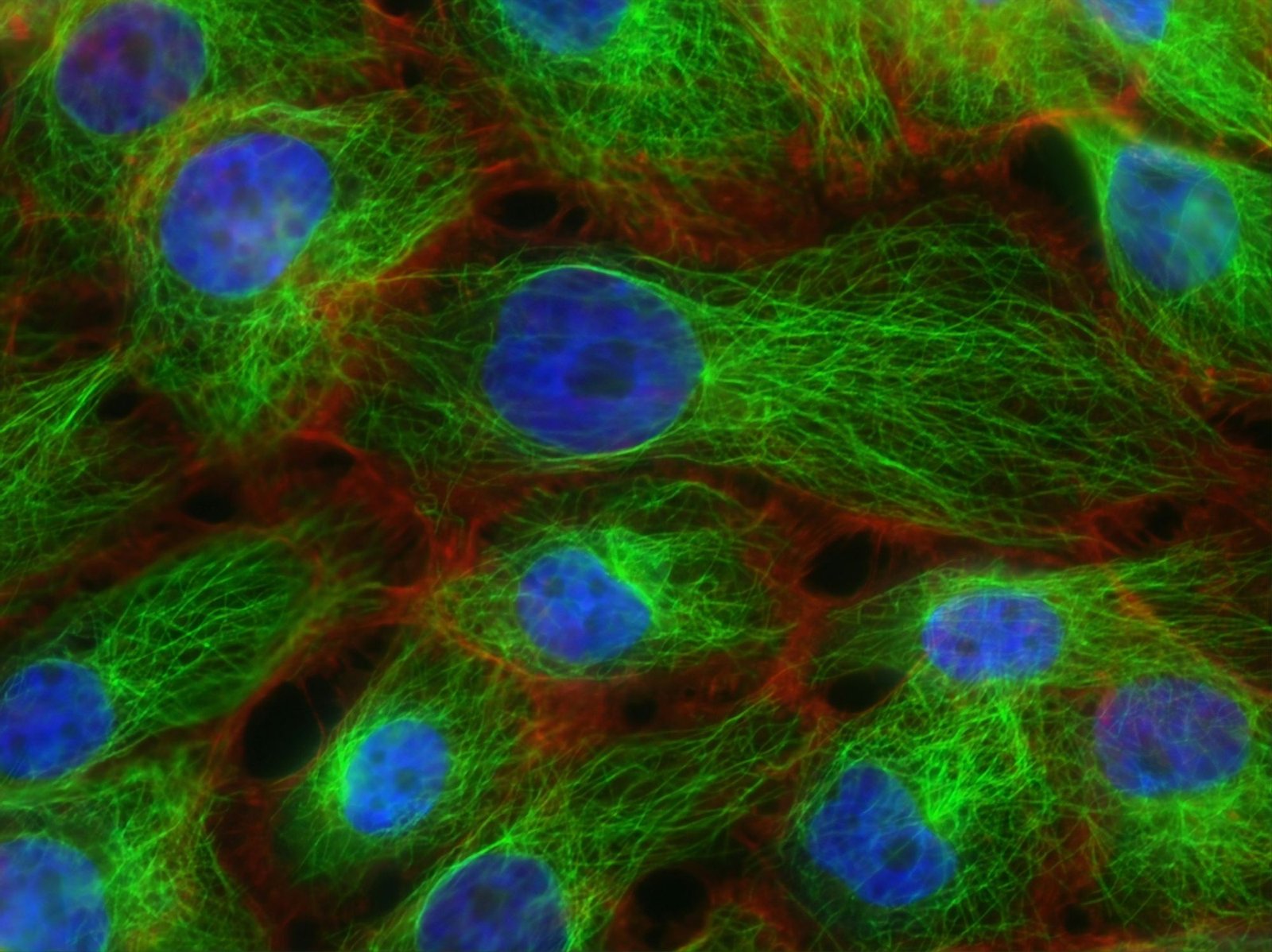
01 · A living model of the cancer
Workflow
How Twin works, step by step.
Step 1
Define the pathway
The treating oncologist selects the relevant Twin route — Blood 600 for blood cancers, or Exome WES, Liquid 523 or Tissue 335 for solid tumours — and confirms the sample and test scope. The choice depends on the clinical question and the available sample.
Blood 600
Twin Blood 600
DNA and RNA together, from blood or bone marrow.
Exome / WES
Twin Exome
Whole-exome sequencing (WES) across every protein-coding gene.
Liquid 523
Twin Liquid
523-gene ctDNA panel from plasma. Hereditary testing included for germline filtering.
Tissue 335
Twin Tissue
335-gene panel. FFPE or fresh tumour tissue.
Step 2
Integrate the available information
Molecular results from the selected pathway are combined with the clinical and imaging context supplied by the treating team. Eight information domains; each contributes only when that information is available.
- 01Molecular & genomic. Variants, CNVs, structural changes, signatures, tumour fraction.
- 02Tumour biology. Clonality, evolution, pathways, microenvironment, vulnerabilities.
- 03Clinical context. Diagnosis, stage, prior lines, comorbidities, intent.
- 04Imaging integration. Radiology findings and change over time.
- 05Immune landscape. TME, immune signatures, biomarkers, predicted response.
- 06Treatment exposure. Therapies, dose, duration, response, toxicity.
- 07Patient factors. Age, organ function, symptoms, goals.
- 08Evidence ecosystem. Guidelines, approvals, trials and research — matched to the patient.
Step 3
Analyse across the framework
AI-assisted analysis runs across the applicable analytical layers. Not every layer runs for every case or every input: RNA-based analysis needs RNA data, growth dynamics need repeated measurements, and imaging integration needs imaging information.
Inputs · as available
- 1Molecular & genomic
- 2Tumour biology
- 3Clinical context
- 4Imaging integration
- 5Immune landscape
- 6Treatment exposure
- 7Patient factors
- 8Evidence ecosystem
Analysis · 21 layers
- Six shared core layers · Layers 1–6
- Tumour behaviour · Layers 7–10
- Clinical integration · Layers 11–14
- Action and continuity · Layers 15–18
- Longitudinal intelligence · Layers 19–21
Structured report
- 01Executive molecular summary
- 02Molecular findings
- 03Treatment options
- 04Clinical-trial matches
- 05Longitudinal view
Clinician-led
Treating oncologist reviews, signs and decides
Then KPCIRC Molecular Tumour Board
Step 4
Produce structured outputs
The findings are organised into five report components.
- 01Executive molecular summaryDistinguish source data from interpretation.
- 02Molecular findingsState coverage, evidence strength and uncertainty.
- 03Treatment optionsOptions to evaluate — never phrased as autonomous prescriptions.
- 04Clinical-trial matchesA potential match is not eligibility or enrolment confirmation.
- 05Longitudinal viewShow only updates supported by actual inputs and cadence.
Step 5
Clinical review and sign-off
Every Twin report is reviewed and signed by the treating oncologist, then taken to KPCIRC's internal Molecular Tumour Board. Clinical authority stays with the oncologist throughout.
- 1
Treating team
Pathway and data
The treating oncologist selects the testing pathway; clinical, molecular and imaging data are integrated.
- 2
OnKommon Twin
21-layer analysis
AI-assisted analysis across the applicable layers produces structured findings for clinician review.
- 3
OnKommon Twin
Structured report
Executive summary, molecular findings, treatment options to evaluate, trial matches and longitudinal view.
- 4
Treating oncologist
Review and signature
Every report is reviewed and signed by the treating oncologist.
- 5
KPCIRC
Molecular Tumour Board
The signed report is then taken to KPCIRC's internal Molecular Tumour Board (MTB).
- 6
Treating oncologist
Decision and continuity
Clinical authority stays with the oncologist. New evidence can prompt reassessment during the six-month journey.
The treating oncologist owns every decision. Every Twin report is reviewed and signed by the treating oncologist, then taken to KPCIRC's Molecular Tumour Board.
KPCIRC sign-off processStep 6
Review what changes over time
The Twin evolves with new evidence for six months. New findings are reviewed inside the workflow, and new evidence can prompt reassessment. At the end of month six, the evidence is reviewed and the next pathway is set — which may be one of the three Twin tracks.
01 · Baseline — Day 0
Integrate the data. Build the Twin.
02 · During months 0–6
Review new findings inside the workflow.
03 · End of month 6
Review the evidence. Set the next pathway.
Walk through the workflow with the team.
A professional demonstration covers the pathway choice, the report and the sign-off sequence.