
04 · 21 proprietary layers
Layer 4 of 21 · Six shared core layers
PhenoMap Molecular and cellular phenotype.
Why it's needed
How might genomic observations relate to a tumour phenotype or biological state?
What it draws on
2 of 8 evidence domains.
What it produces
Structured phenotype-related observations or interpretation.
Why it's essential
Layer 4 of 21.
1 · What it does
What PhenoMap does
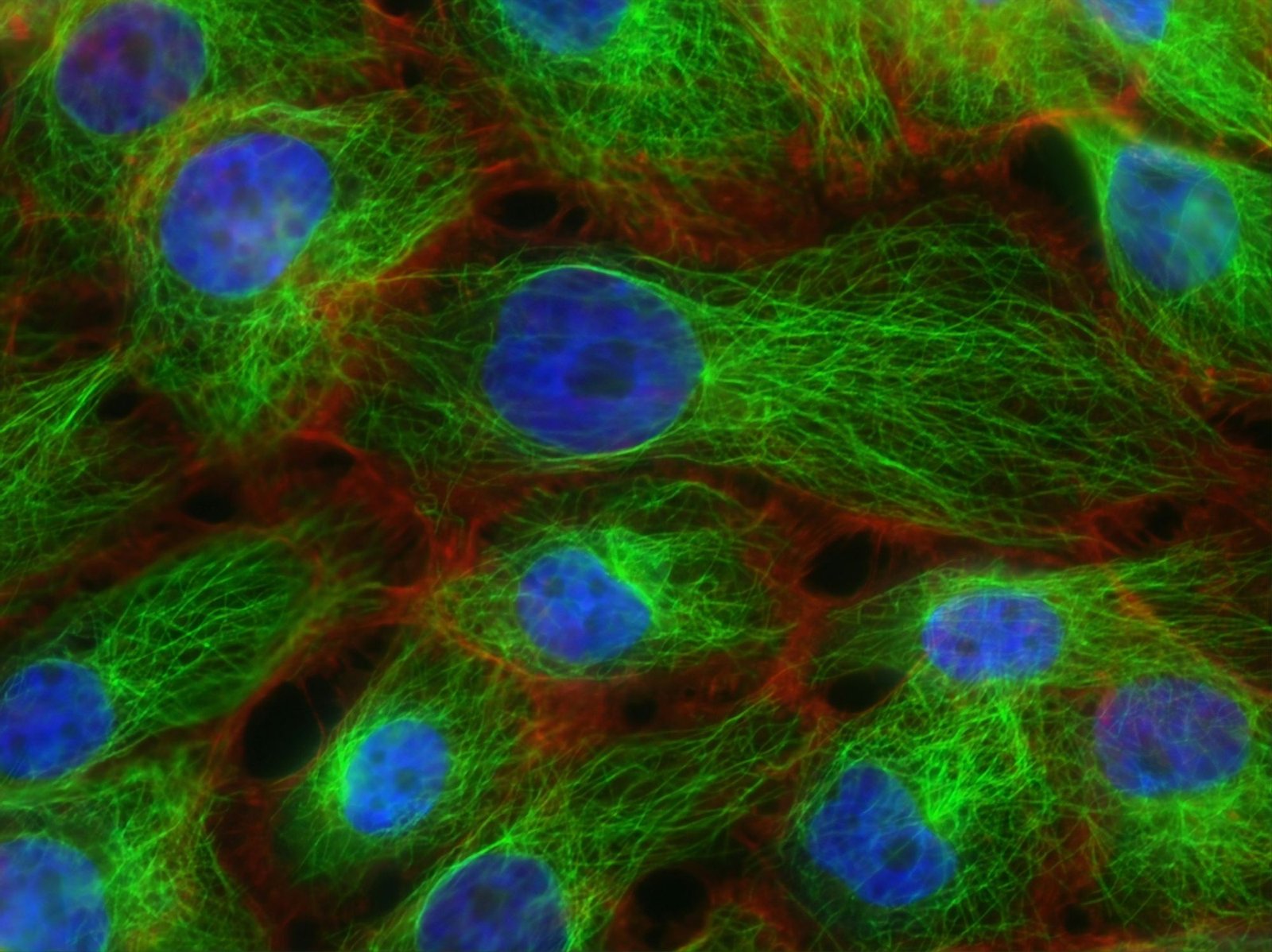
Genomic changes matter because of what they do to the cell. PhenoMap is intended to connect individual molecular observations to the tumour's likely biological state, for example which signalling pathways appear to be altered, so that a list of variants becomes a pathway-level picture.
2 · Scientific question
The question it addresses
How might genomic observations relate to a tumour phenotype or biological state?
Intended function
Describe the intended connection between molecular findings and phenotype-related evidence.
3 · Data inputs and required context
What it draws on
- 01 Molecular & genomic
- 02 Tumour biology
Annotated variants and, where available, expression data and pathology context.
4 · Scientific basis
The science behind it
Scientific basis
Phenotype inference generally maps alterations onto curated pathway and functional annotations and, where RNA data exist, onto expression programmes. These inferences are hypotheses unless confirmed by direct measurement such as pathology or immunohistochemistry.
5 · Output and evidence sources
What it produces
Main output
Structured phenotype-related observations or interpretation.
Output type
- Computational inference. Estimated by analysis of available data rather than measured directly.
6 · Why it\u2019s essential
How it powers the Twin
Supplies biological context to the actionability, resistance and microenvironment layers, and groups related alterations so that their combined effect can be considered.
Report section
7 · Why it\u2019s needed
What it changes — for doctors, patients and researchers
Clinicians
Pathway-level context for interpreting several alterations together.
Doctor & Clinical TeamPatients & caregivers
A plain way to describe what the changes in the tumour may be doing.
Patient & Caregiver8 · Dependencies and limitations
Limitations
- Pathway knowledge is incomplete, and the functional effect of many variants is unknown.
9 · Review and uncertainty
How the output is handled
Output status
An AI-assisted analytical output presented as structured findings for clinician review. It becomes part of a report only after the treating oncologist has reviewed and signed it.
How uncertainty is communicated
Each observation is labelled as measured or inferred, and unknown-effect variants are kept separate from those with established function.
10 · Claim boundary
What this layer does not establish
A computationally inferred phenotype is not a measured biological state of the tumour.
The treating oncologist owns every decision. Every Twin report is reviewed and signed by the treating oncologist, then taken to KPCIRC's Molecular Tumour Board.
KPCIRC sign-off process