
Skip to content

Stage 01 · OnKommon Interpreter

Interpret the molecular evidence.

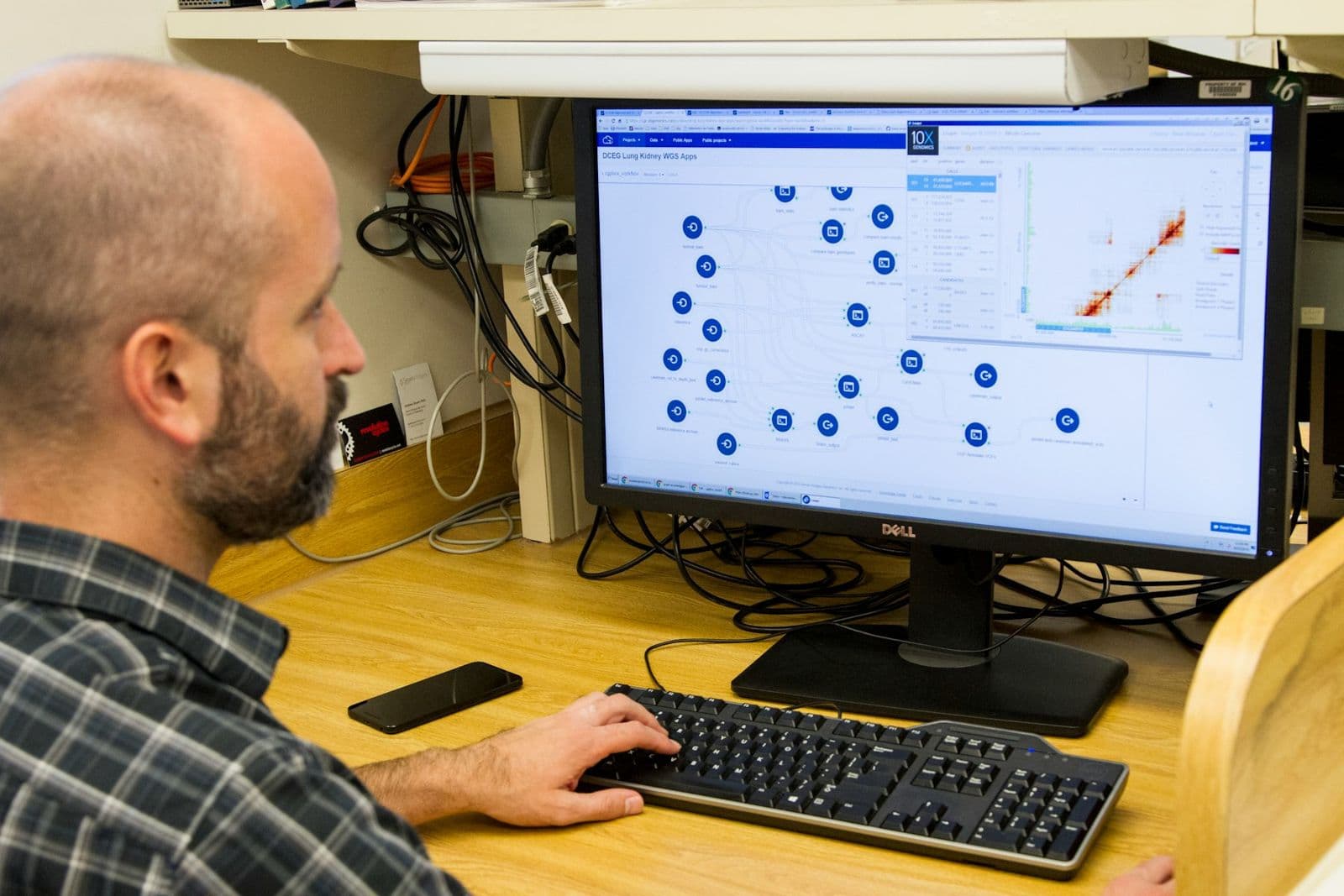
What does the tumour's genome tell us? AVATAR begins with whole-exome sequencing of the solid tumour, read by the OnKommon Interpreter.
  1. 01Interpret
  2. 02Model
  3. 03Screen
  4. 04Observe
  5. 05Review

Interpreter workflow

Genome → variants → evidence → findings

  1. 01

    Tumour genome

    Sequencing reads the alterations in the tumour's DNA.

  2. 02

    Variant analysis

    Variants are catalogued, filtered and annotated.

  3. 03

    Evidence interpretation

    Each alteration is weighed against curated evidence.

  4. 04

    Molecular findings

    A structured view of what is known and what is uncertain.

What it examines

Not every alteration drives cancer

Interpretation separates likely drivers from background variants and keeps unresolved findings visible.
Likely driverBackground variantUnresolved

Variant-landscape categories used in AVATAR interpretation.

  • Potential drivers

    Alterations that may contribute to tumour growth.

  • Response biomarkers

    Alterations associated with sensitivity or resistance.

  • Evidence strength

    The level and type of support for each association.

  • Uncertain findings

    Alterations whose significance is unresolved.

Stage summary

Inputs and output

01

Interpret · OnKommon Interpreter

Genomic interpretation

Computational observation
What happens
The tumour genome is sequenced by whole-exome sequencing. Variants are catalogued, filtered and annotated, and each alteration is weighed against curated evidence.
Inputs
Solid-tumour whole-exome sequencing data and relevant clinical context.
Intended output
A structured molecular interpretation: drivers, response biomarkers, supporting evidence and the findings to watch.
What it establishes
Which alterations drive this tumour, and how strong the evidence is for each.
Why it matters
It tells AVATAR which drivers to carry into the living model.

Next: mutation-informed modelling.

Continue the journey

For doctors

Superpowers for the treating oncologist.

→