Book a free consultation
A no-obligation conversation with our care team, arranged through KPCIRC.
Book a consultation
If this is where you are
Newly diagnosedReports arriving, no plan yetAlready tested elsewhereYou have results you cannot readOn treatment nowYou want to know it is workingOr
Finished treatmentWatching for anything left behindWorried about familyInherited risk, and relativesWanting a second opinionA decision you are unsure aboutDecide
Blueprint CareThe flagship decision report and a dedicated clinical teamSignalOne free question answered on WhatsApp within four hoursNavigationRecords you already have, turned into a clarity timelineDecipherInterpretation of sequencing already done elsewhereTest: solid tumour
All Signature testsEvery panel compared, side by sideSignature STb33 genes from a blood drawSignature STb O118 genes from blood, including fusionsSignature STb O+523 genes, with TMB, MSI and pharmacogenomicsSignature STt OComprehensive profiling from a tissue blockTest: blood cancer
Signature BML+Myeloid, 600+ genes, with MDS and MPN overlapSignature BLL+Lymphoid, 600+ genes, with Philadelphia-like detectionSignature CustomDesigned around one question when neither family fitsMonitor
SentinelSerial monitoring while treatment is runningSentinel SolidctDNA monitoring for solid tumoursClearMolecular residual disease surveillanceClear SolidTumour-informed surveillance for solid tumoursClear BloodResidual disease surveillance after blood cancer treatmentProtect
HeritageInherited risk, assessed properlyHeritage CoreA broad inherited-risk assessmentHeritage AdhocFocused testing for named relativesCancer DictionaryWhat is discussed in your specific cancerReference
Cancer DictionaryOne structured entry per cancer typeBiomarker LibraryOne page per marker, in plain languagePatient ResourcesGlossary, guides and how to use themWatch, read and ask
Video LibraryShort explainers, captioned and translatedJourneysFour composites showing how a decision gets madeCase studiesNine situations and the test that fits eachFAQThe questions we are asked mostClear · solid tumours
Watching for trace ctDNA after curative-intent treatment: the earliest molecular sign that a solid cancer may be returning.
Clear Solid
After curative-intent treatment for a solid tumour, whether surgery, radiotherapy or systemic therapy, Clear Solid watches for trace ctDNA: the earliest molecular sign that a cancer may be returning.
Tuned to your specific cancer.
The most sensitive MRD approach is tumour-informed, built around the specific mutations found in your own tumour. Where a baseline exists, for example from a Signature test, Clear Solid tracks exactly the right signals. That improves the odds of catching a true return while limiting false alarms.
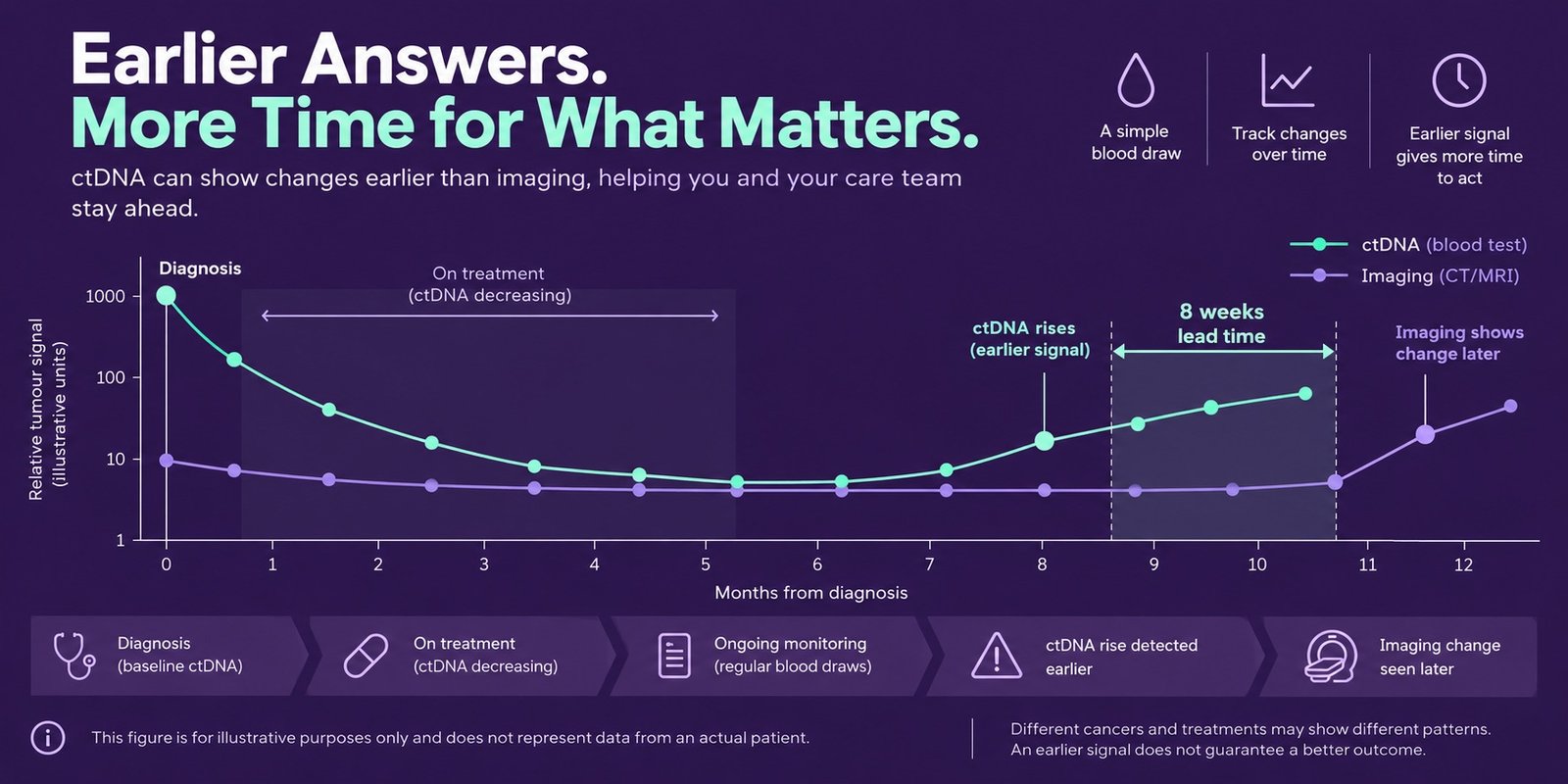
Scheduled surveillance read against your own baseline.
KPCIRC reviews any change, rather than an automated alert.
Including prompt imaging and next-step options.
Being clear about our limits
| Term | What it means |
|---|---|
| MRD | Molecular residual disease, microscopic disease left after treatment. |
| ctDNA | Circulating tumour DNA, tumour fragments a blood test can read. |
| Tumour-informed | An MRD test built from your own tumour’s mutations, for higher sensitivity. |
| Recurrence | The cancer returning after a period of remission. |
| Lead time | How far ahead of a scan a blood test can flag returning disease. |
Clear Solid is a genomic (DNA-based) test for use by qualified healthcare professionals. It supports clinical judgement, it does not replace it, and it must be read alongside your full clinical history and applicable guidelines.
Regulatory status (India). Registration of our genomic tests as in-vitro diagnostic (IVD) medical devices with CDSCO is in progress, with the IVD class pending. Sequencing and variant calling are done by an accredited laboratory partner holding NABL (ISO 15189), CAP and CLIA accreditation, following ACMG/AMP/ASCO/CAP guidelines and a CE-IVD certified variant database. The OnKommon interpretation engine is provided for research and decision-support use. Marketing follows the Drugs and Magic Remedies (Objectionable Advertisements) Act, 1954.
Take the next step
A no-obligation conversation with our care team, arranged through KPCIRC.
Book a consultationCommission your decision report and a dedicated clinical team.
Explore Blueprint CareSignal replies to your first question within four hours, at no cost.
Start with Signal